Mount Funaoka (Funaoka Yama) is a hill located in Kita Ward, Kyoto, with an elevation of about 120 meters. It was named after its shape, which resembles a boat. This mountain has a long history and is said to have been the east-west reference point during the construction of Heian-kyo (ancient Kyoto).
During the Heian period, it was known as a place of recreation for aristocrats and is mentioned in Sei Shonagon’s “Makuranososhi”. During the Onin War (1467-1477), it served as a base for the Western Army, and subsequently, the surrounding area came to be called “Nishijin”.
Kenkun Jinja Shrine
Halfway up Funaoka Yama stands Kenkun Jinja Shrine (Takeisao Shrine), dedicated to Oda Nobunaga, a hero of the Warring States period. It was founded in 1869 by imperial decree of Emperor Meiji.
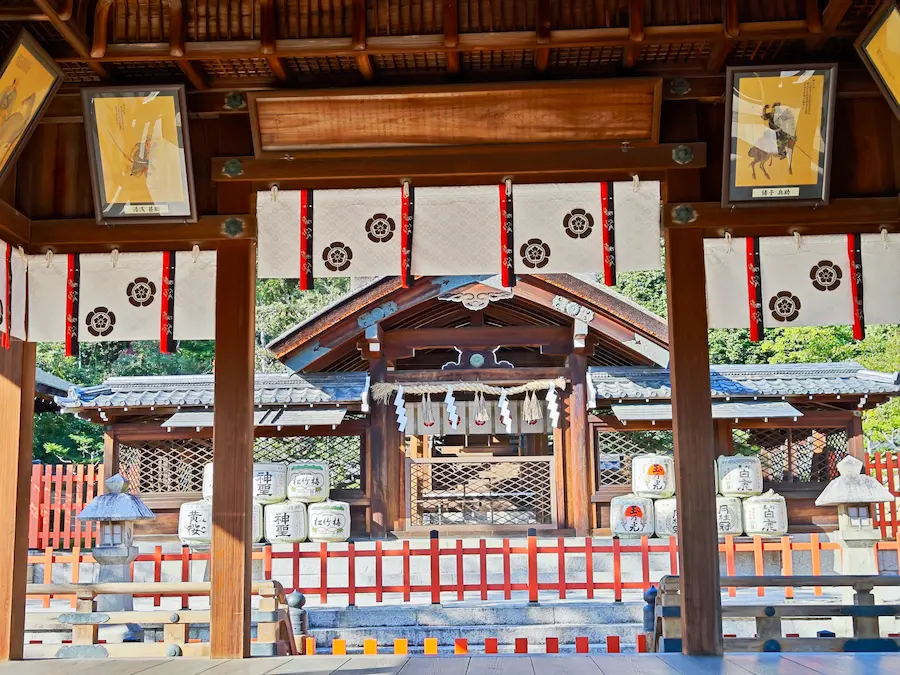
The main deity enshrined is Oda Nobunaga, with his son Oda Nobutada as an auxiliary deity. Nobunaga is honored here for his achievements in laying the foundation for Japan’s modernization.
Within the shrine grounds, there is a stone monument inscribed with the poem “Atsumori,” which Nobunaga was said to have favored. The worship hall also displays portraits of Nobunaga and his retainers.
From Kenkun Jinja Shrine, visitors can enjoy spectacular views of Kyoto City and the 36 peaks of Higashiyama. It is also known as a viewing spot for the Gozan no Okuribi fire festival.

Today, Funaoka Yama has been developed into a park, serving as a place of relaxation for citizens. Stone monuments marking the battle sites of the Onin War have also been installed, making it a place where visitors can experience history.
Kenkun Shrine Official WEB site
Funaoka Yama as a burial ground
Funaoka Yama and its surrounding area have long been known as an important burial ground in Kyoto.
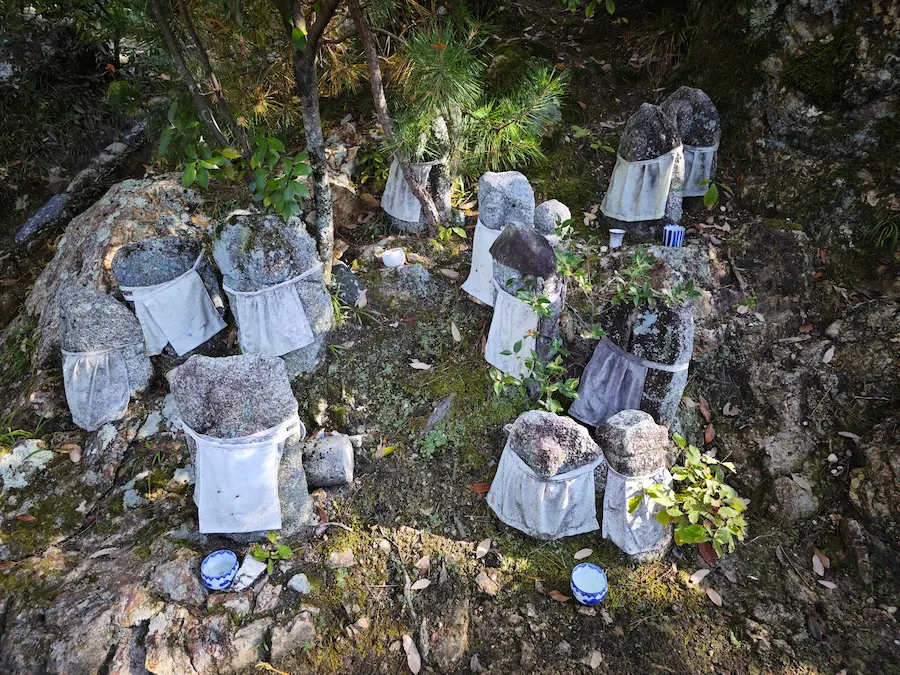
One of the Three Major Burial Grounds
The area around Funaoka Yama was part of Rendaino, one of Kyoto’s three major burial grounds. The other two were Toribeno to the east and Adashino to the west. Adashino is home to the Adashino Nenbutsuji Temple, famous for its many old tombstones of nameless people.
Use as a Cremation Site
Funaoka Yama was particularly widely used as a cremation site. Many people were cremated around this mountain, and even today, imperial mausoleums of successive emperors and members of the imperial family are scattered in the area.
Geographical Features of Funaoka Yama
Rendaino was located on the north side of Heian-kyo (ancient Kyoto), in the lowlands of the Kamiya River basin. This geographical feature is thought to be one of the reasons it was chosen as a burial ground.
Historical Period
This area was used as a burial ground for about 160 years from the middle to the end of the Heian period. It was abolished in 1870 and later moved to Rengetani behind Kinkakuji Temple, via Ryoanji Temple.
Related Facilities
Facilities related to funerals still remain on Senbon Street. For example, there are Senbon Enmado Temple, Shakuzoji Temple (Kuginuki Jizo), and Jobonrendaiji Temple.
Mentions in Literary Works
The importance of Funaoka Yama as a burial ground is also reflected in literary works. For instance, the 137th chapter of “Tsurezuregusa” states, “While there are many days when (the dead of the capital) are sent to Toribeno, Funaoka, and other fields and mountains, there is no day when they are not sent.”
In this way, the area around Funaoka Yama functioned as an important burial ground in Kyoto for a long time, and its history is still deeply engraved in the landscape and culture of the region.
Shakuzoji temple is widely known as “Kuginuki Jizo” (Nail-Pulling Jizo), and there’s an interesting story behind this name.
Nearby spots of Funaoka Yama
Jobonrendaiji Temple was a central temple in Rendaino, one of Kyoto’s three major burial grounds.
The most distinctive feature of Senbon Enmado is its main deity, King Enma, the ruler of the underworld in Buddhist tradition. The 2.4-meter-tall statue of King Enma was created in 1488.
Related articles:
[…] Kyoto, said to have been founded in 1103 during the late Heian period. Situated at the foot of Funaoka Yama (Mount Funaoka), it was a central temple in Rendaino, one of Kyoto’s three major burial […]