Where is a good place to see Ito Jakuchu’s work in Kyoto? Several temples and museums in Kyoto have Jakuchu’s works on permanent display. Other times, Jakuchu’s wonderful works are displayed in special exhibitions. So be sure to keep an eye out for events or ask your guide.
Ito Jakuchu is a genius painter of the mid-Edo period. Born in 1716 to a wealthy greengrocer family in Nishiki Market in Kyoto, he took over the family business at 23. But he handed it to his younger brother at 40 to focus on painting.
Jakuchu’s masterpiece
Jakuchu’s masterpiece is “Doshoku Sai-e” (Colorful Realm of Living Beings), a series of 30 bird-and-flower paintings created over ten years from around age 43. This work, characterized by its meticulous brushwork, was donated to Shokokuji Temple in Kyoto in memory of his late father.
His style was based on the Kano school techniques but evolved by studying Song and Yuan dynasty Chinese paintings and various contemporary styles to establish his unique expression.
He is particularly famous for his chicken paintings, which capture the essence of their vitality with powerful portrayals.

Technically, Jakuchu employed innovative methods such as “uraizaishiki” (back coloring), “masume-gaki” (grid painting), and “sujime-gaki” (line painting)1. “Uraizaishiki” involves painting colors on the back of the silk, creating complex hues and depth. “Masume-gaki” divides the canvas into small squares for coloring, enabling a unique mosaic-like expression.
Jakuchu also excelled in ink painting, creating humorous works like “Vegetable Parinirvana”. In printmaking, he used the “takuhanga” technique to produce fantastical works such as “Jokoshu” (Pleasurable Boat).
Devoted to Zen Buddhism, Jakuchu spent his later years near Sekihoji Temple, creating 500 Rakan stone statues. He continued painting until his death at 85, constantly pursuing his unique artistic world.
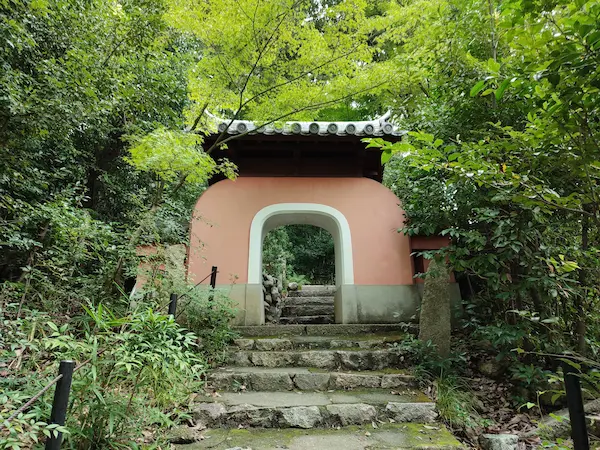
Today, Jakuchu’s works have fans worldwide, with places like Shokokuji Temple, Nishiki Market, and Sekihoji Temple popular as sites associated with the artist.
Places to see the works of Ito Jakuchu
Many of Jakuchu’s works are in the possession of many temples and museums. Here are some of the most representative of them.
Sekihoji Temple is the temple where Jakuchu’s grave is located. It is located near Fushimi Inari Shrine. Jakuchu’s works are exhibited only around the anniversary of his death in September. On the other hand, the stone statues of five hundred arhats created by Jakuchu can be seen at any time.
Shokokuji Temple is closely associated with Jakuchu. Shokokuji Shotenkaku Art Museum is located here. The museum has a permanent collection of some of Jakuchu’s works and frequently holds special exhibitions related to Jakuchu.
Fukuda Art Museum is located in Arashiyama, a popular tourist destination. The museum has a large number of Jakuchu’s works in its collection and frequently holds exhibitions.
Related articles:
[…] temple is the place where Ito Jakuchu, one of the most famous painters of the Edo period, built a hamlet and spent the last years of his […]
[…] works from the Kyoto art scene. Visitors can appreciate masterpieces by renowned artists such as Ito Jakuchu, Uemura Shoen, Maruyama Okyo, Takeuchi Seiho, Yokoyama Taikan, and Takehisa Yumeji. Actually this […]